Kingslea Gardens Watermain Replacement
Design : April 2025 -> February 2026
Toronto Water has requested this project to replace the existing aging watermain along Kingslea Gardens. The current watermain has reached the end of its service life and requires replacement to maintain system reliability and reduce the risk of future failures. As roadway resurfacing is also planned on the same streets, the watermain replacement will be coordinated with the resurfacing works to minimize disruption, improve construction efficiency, and restore the roadway following the underground infrastructure upgrades.
The existing watermain, originally constructed approximately 100 years ago, is now being targeted for full replacement to ensure safety and reliability of the municipal water system.
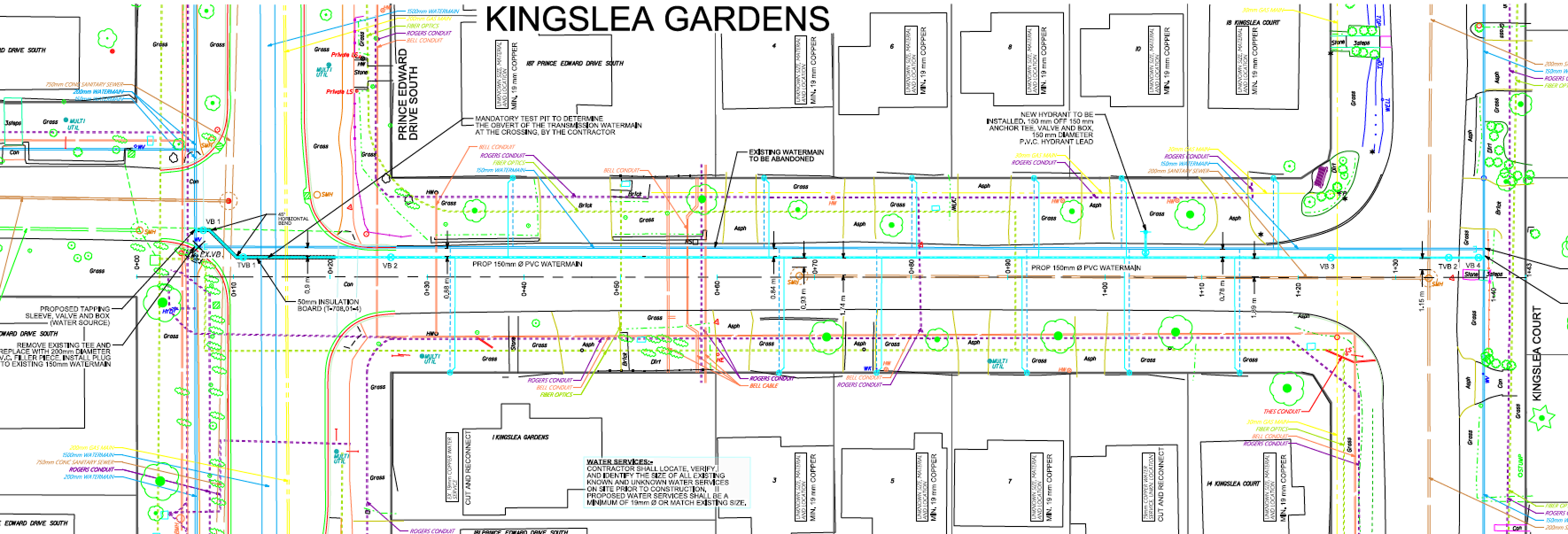
This project involved the replacement of a relatively short, 134-meter watermain, which presented several specific challenges that required careful analysis and (fortunately) textbook solutions to ensure a durable and efficient outcome.
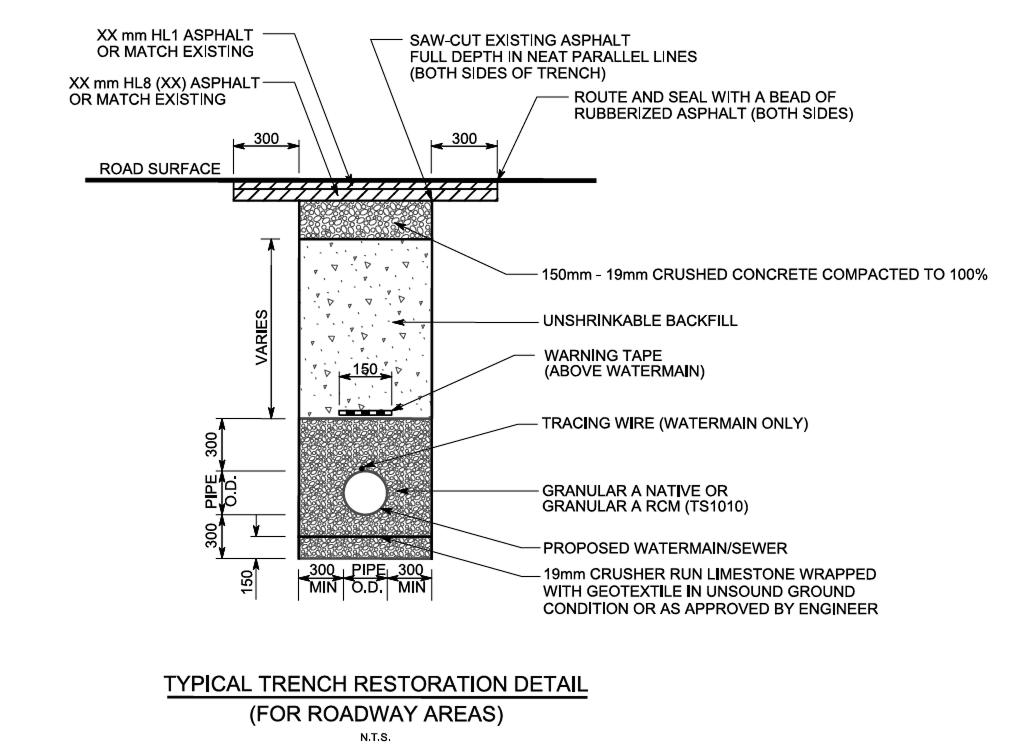
The trench restoration involves carefully cutting the existing road on both sides of the trench, sealing the edges, and replacing the asphalt to match the surrounding pavement. The watermain is laid on a stable base of crushed stone or granular material, with protective layers like warning tape and a tracing wire installed above it. The trench is then backfilled with materials that won’t shrink, and the surface is rebuilt with compacted concrete and asphalt to restore the road fully. Minimum clearances around the pipe ensure proper support and drainage, while adjustments are made for weaker ground as needed.
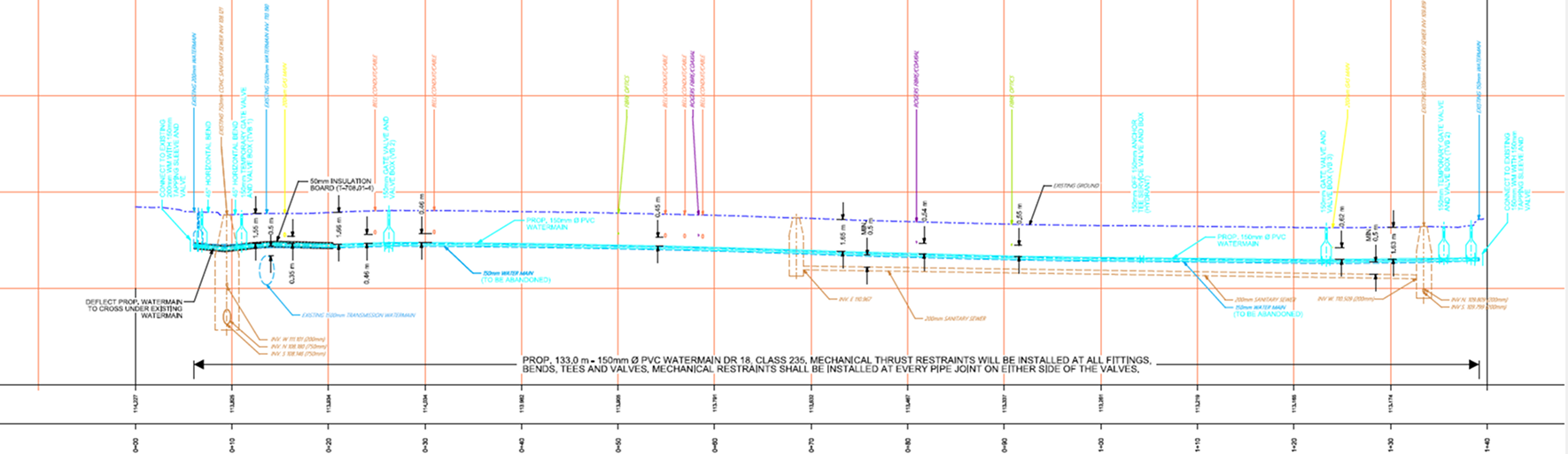
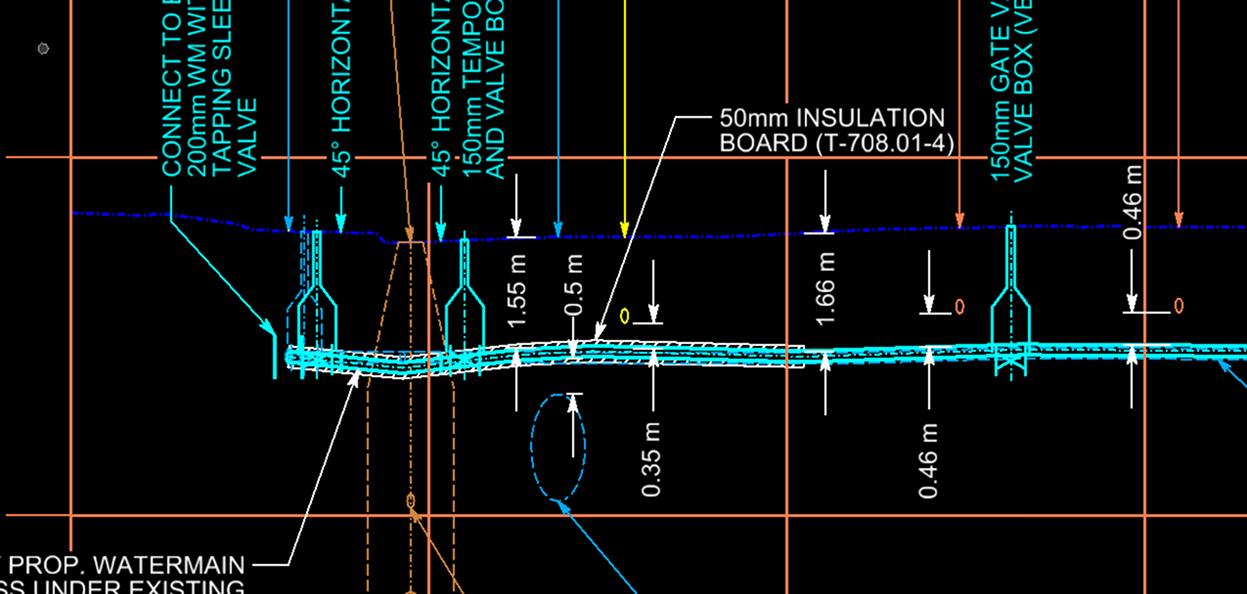
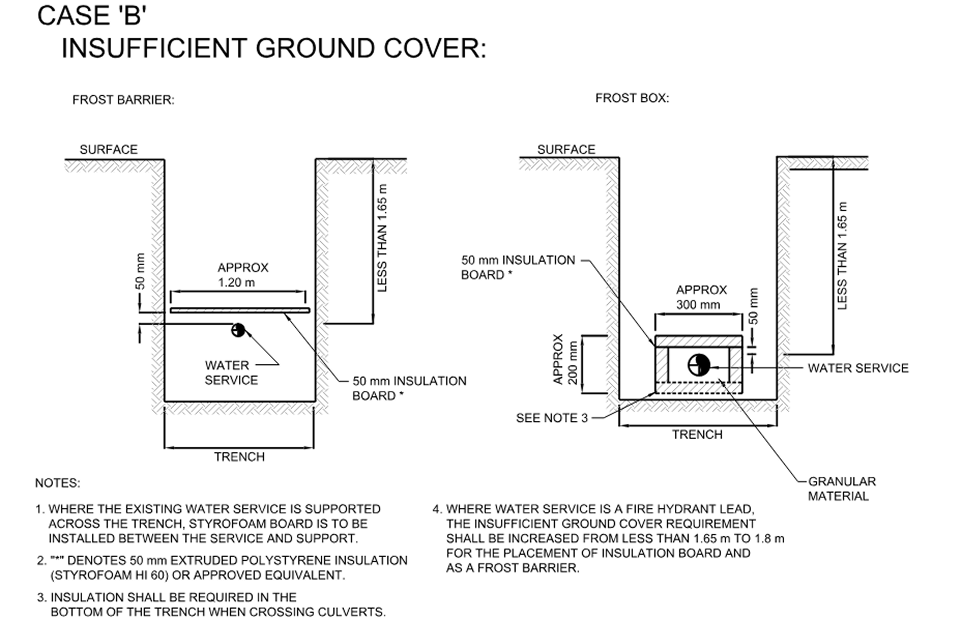
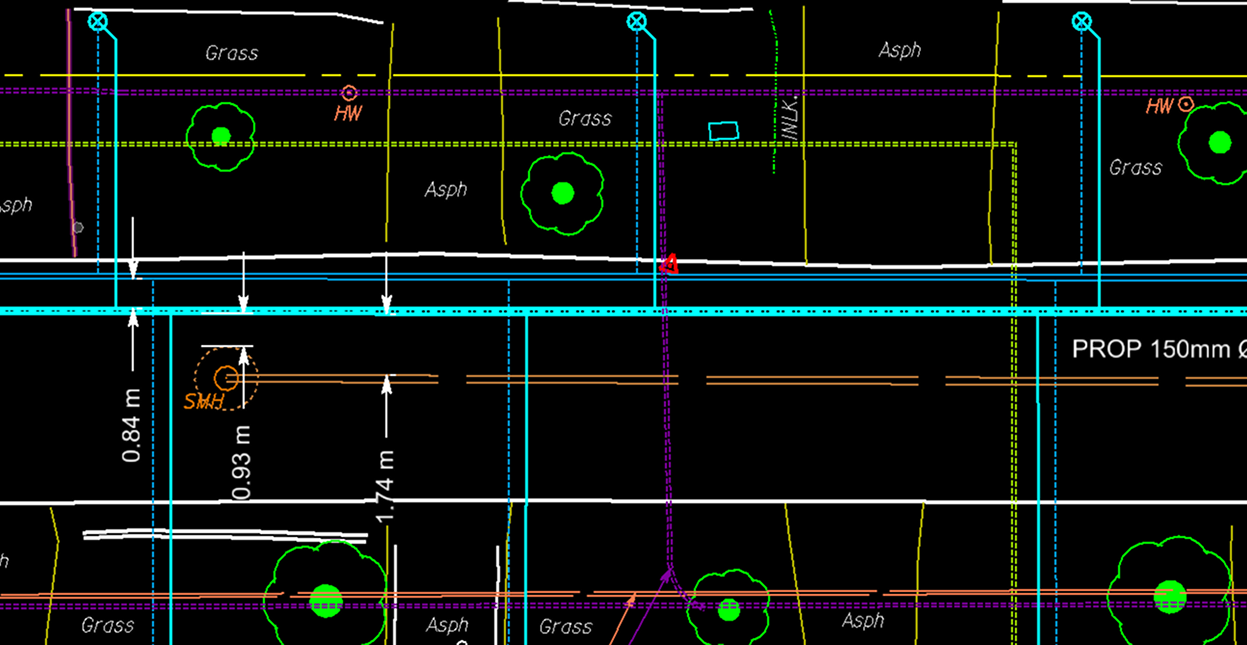
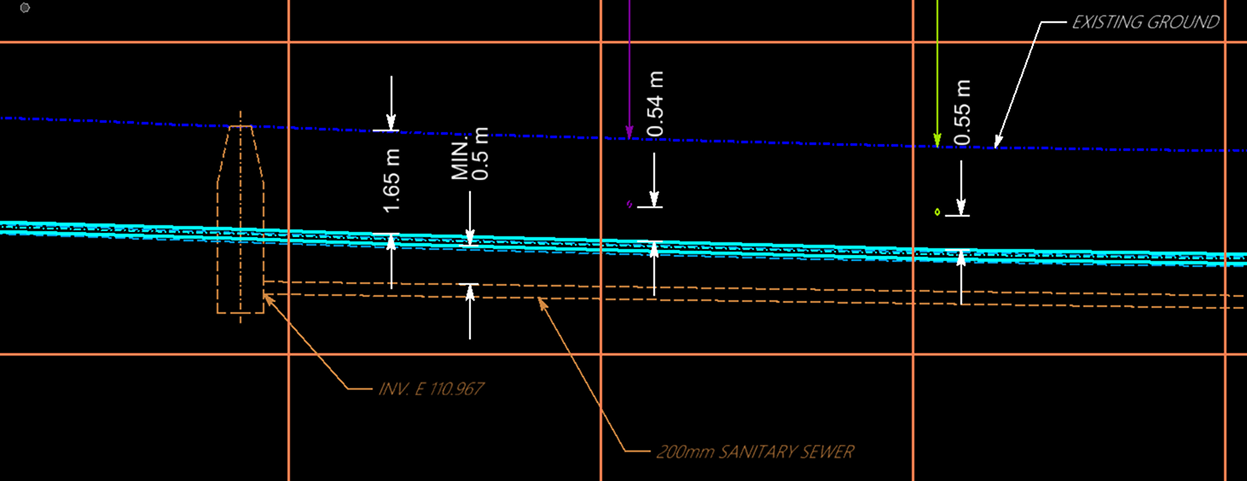
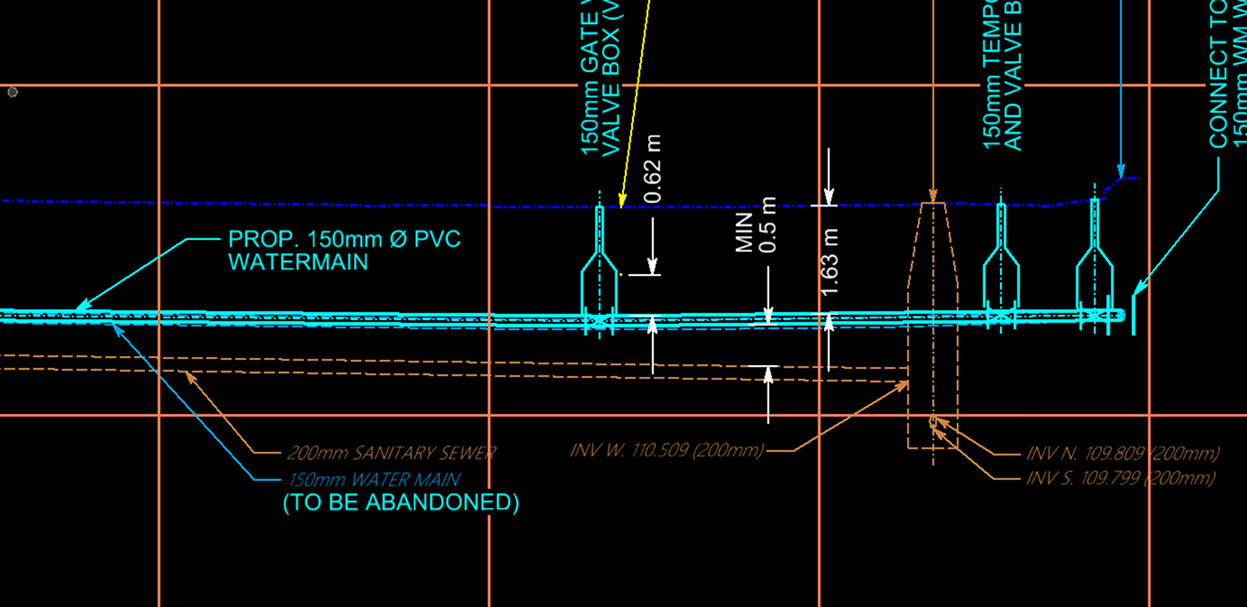
The proposed 130-meter watermain replacement was designed with a target minimum cover of 1.65 meters. Due to an existing 1500 mm transmission watermain along the alignment, maintaining full cover was not feasible. Installing below the transmission main would have required a longer alignment with multiple vertical bends, increasing cost, while routing above with large bends was also expensive. The final design passes the new watermain over the transmission main, ensuring a minimum vertical separation of 0.5 meters at the crossing, and then gradually transitions down to achieve the standard 1.65-meter cover. Sections with less than 1.65 meters of cover are protected with a 50 mm insulation board.
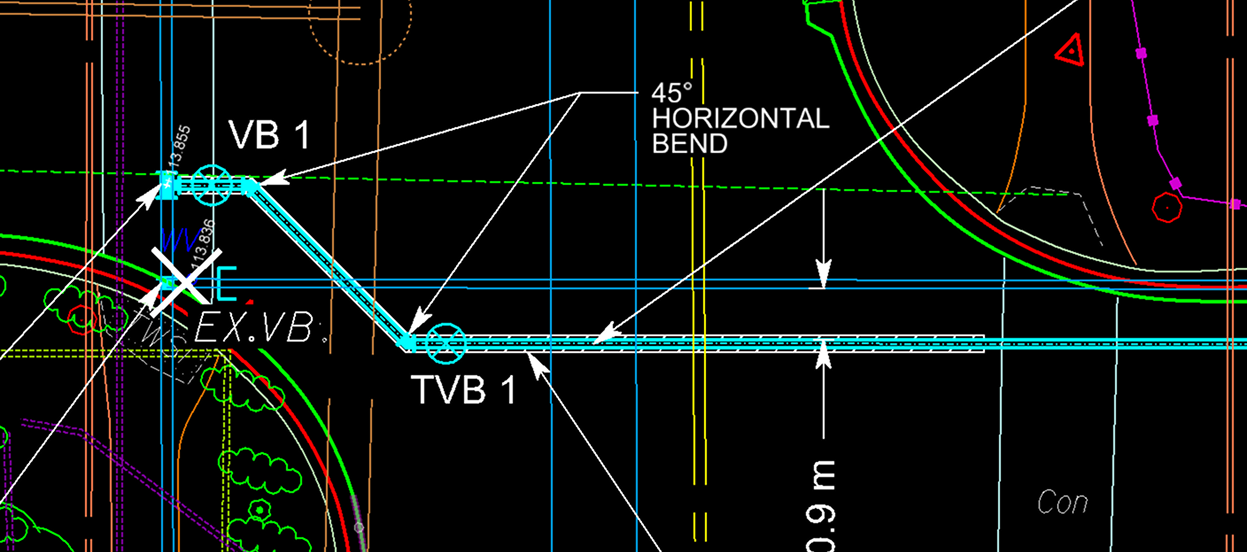
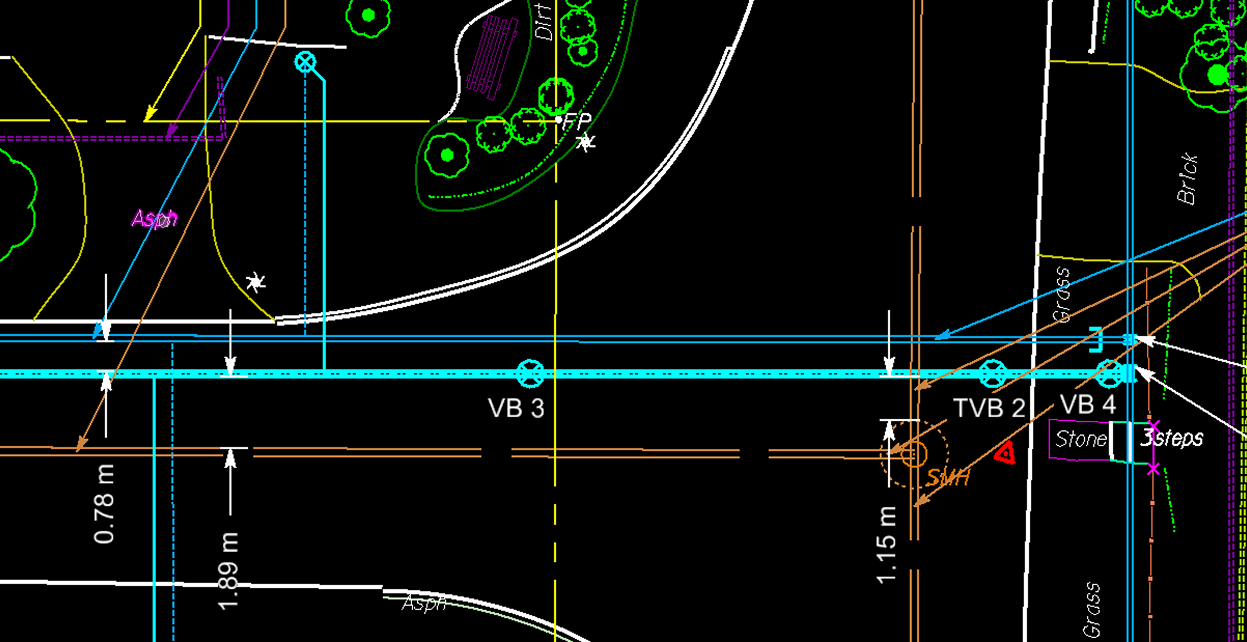
Additionally, horizontal bends were incorporated into the plan to avoid existing infrastructure, including the TWSI, sidewalk, and boulevard areas, even though the ideal alignment would be straight. The watermain is sourced from the perpendicular line rather than the parallel line to allow complete replacement of the existing pipe, ensuring long-term reliability.
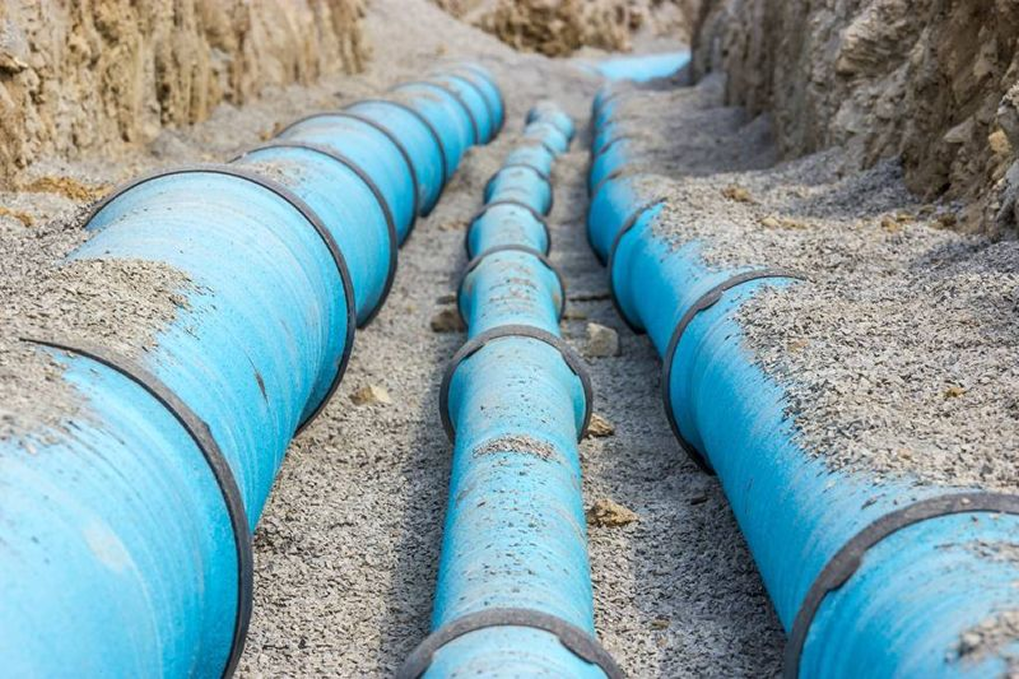
The proposed watermain had a target minimum cover of 1.65 meters from the top of the pipe to the surface. However, due to the presence of an existing 1500 mm transmission watermain along the alignment, achieving this cover throughout was not feasible. Constructing the new watermain below the transmission main would have significantly increased costs due to the need for a longer alignment and multiple vertical bends. Constructing above with large bends would also have been costly. Therefore, the design passes the new watermain over the transmission main, maintaining a minimum vertical separation of 0.5 meters at the crossing. The profile then gradually transitions downward until the standard cover of 1.65 meters is restored. For sections where the cover remains less than 1.65 meters, a 50 mm insulation board is provided to ensure adequate protection.
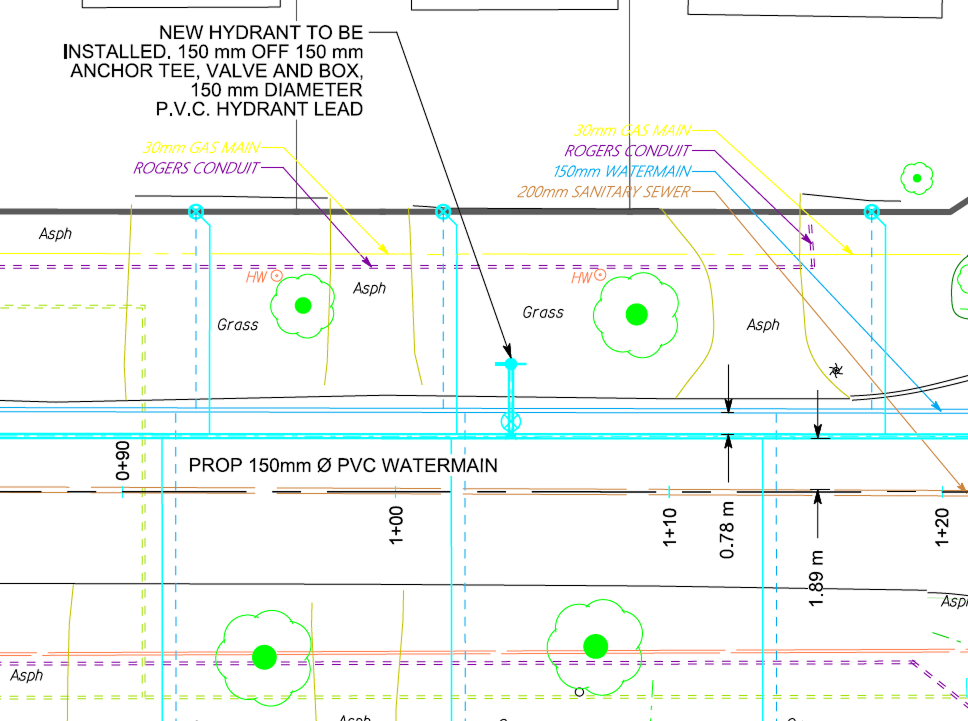
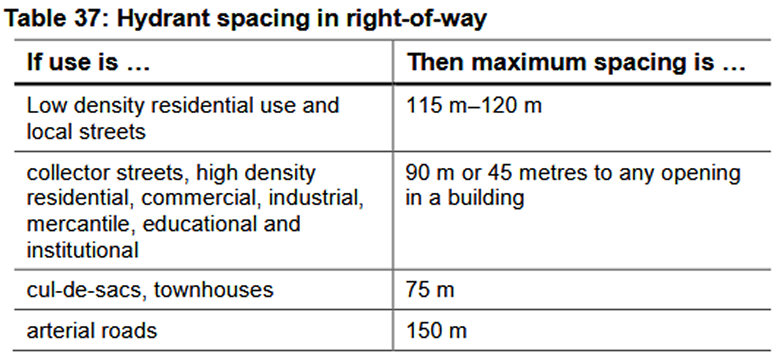
Identified a gap in fire protection coverage and designed the installation of a new fire hydrant in a residential area that previously had no hydrant access. The design included all necessary water connections, valves, and underground piping to ensure compliance with municipal fire safety standards, which require hydrants to be spaced no more than 115-120 meters apart in residential neighborhoods.
Designed a new water main installation that successfully navigated around an existing sewer line, achieving 0.5m vertical clearance between the pipes while maintaining adequate 1.65m burial depth for freeze protection.
Designed a water main connection using a tapping sleeve and valve, which allows the new pipe to be cleaned and disinfected separately before connecting it to the existing water system, ensuring safe drinking water, and installed a temporary valve box for future activation when construction is complete.