Monogram Place

Design : January 2026 -> February 2026

The 200 m Monogram Place project involves a major road rehabilitation, replacing the entire pavement structure, including the granular base, rather than just milling and resurfacing. As part of the work, the City will also complete State of Good Repair (SOGR) upgrades to curbs, gutters, and selected sidewalks and driveways. Located at Islington Avenue in an industrial area with limited residential activity, Monogram Place is a collector road, and this project will restore its structural integrity, improve drainage, and ensure long-term durability for heavy vehicle traffic.

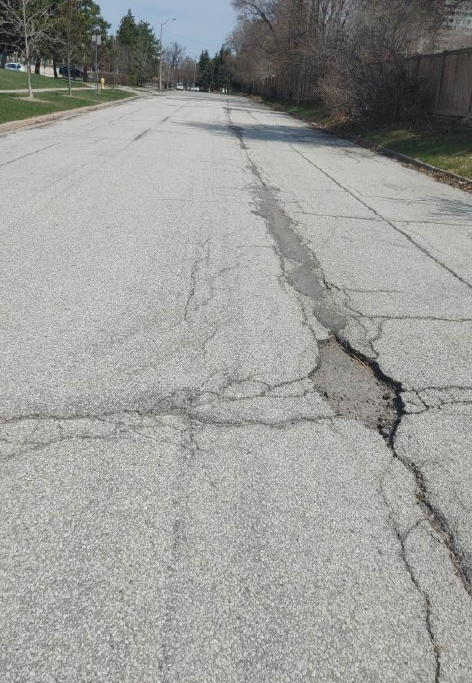
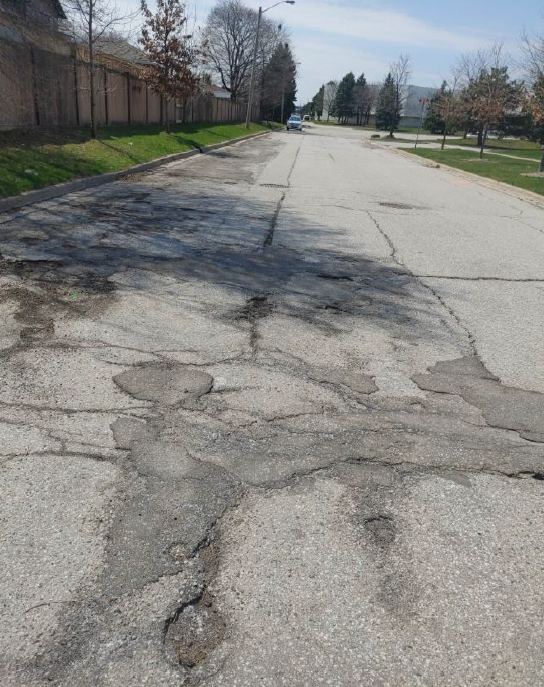
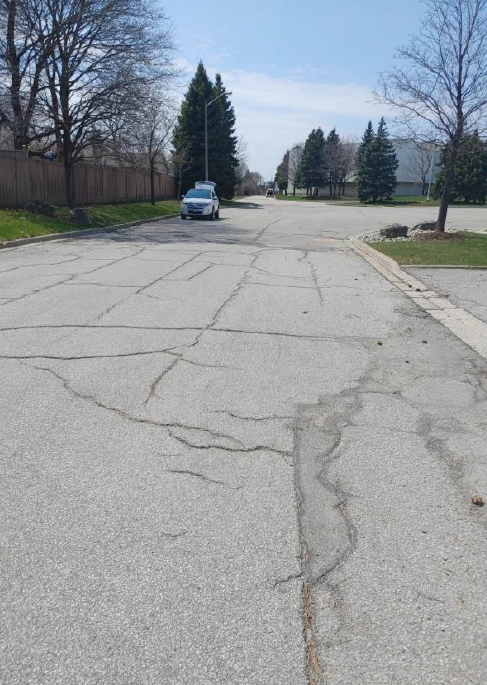
The road, last reconstructed approximately 40 years ago, now exhibits extensive surface cracking and deterioration consistent with the age of the pavement structure and the cumulative effects of long-term service life.

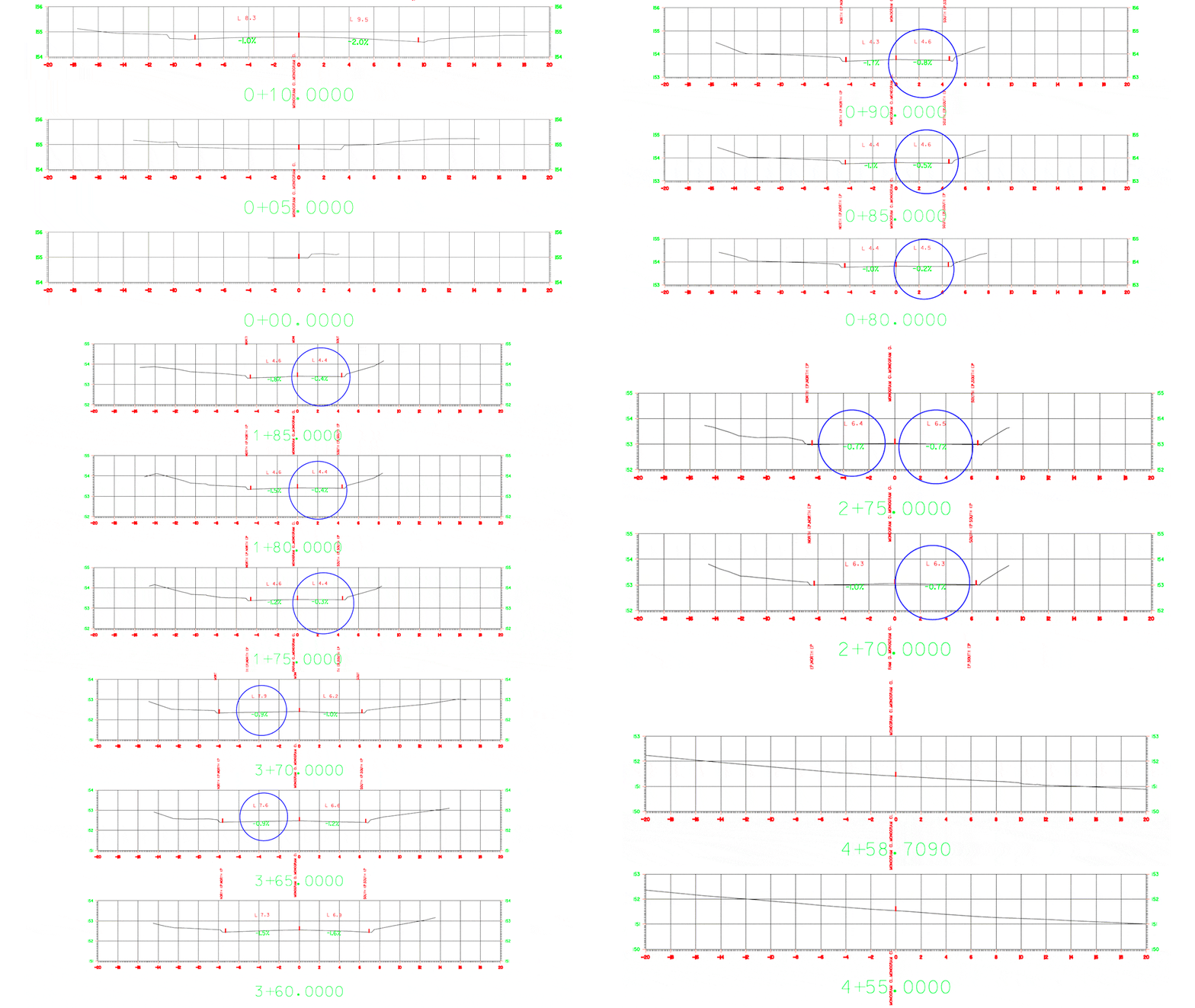
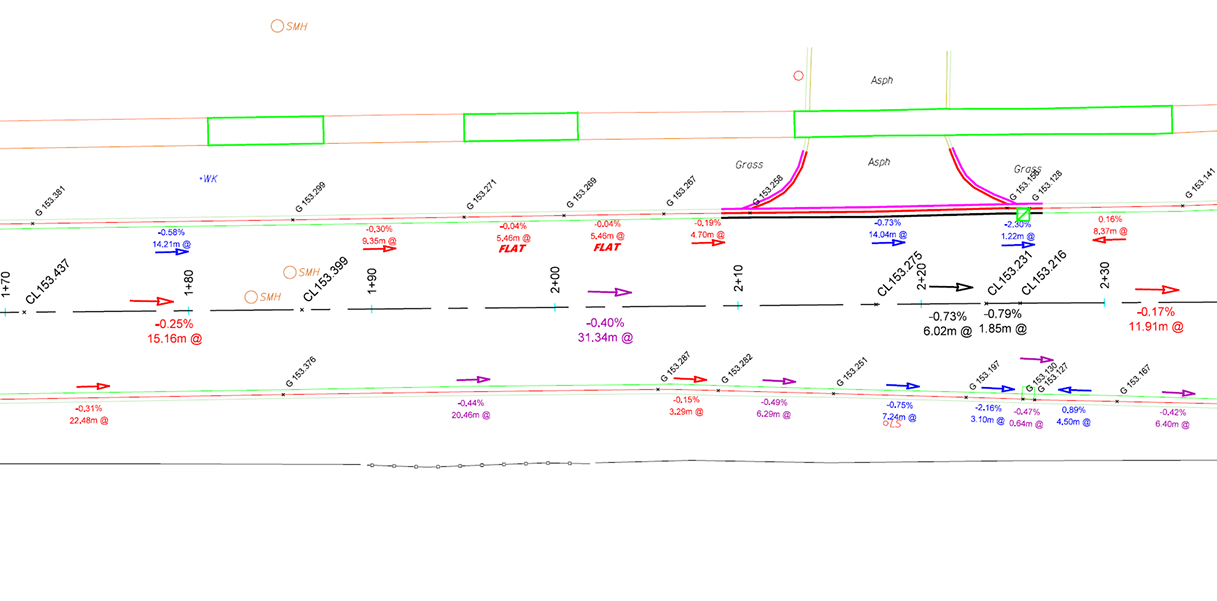
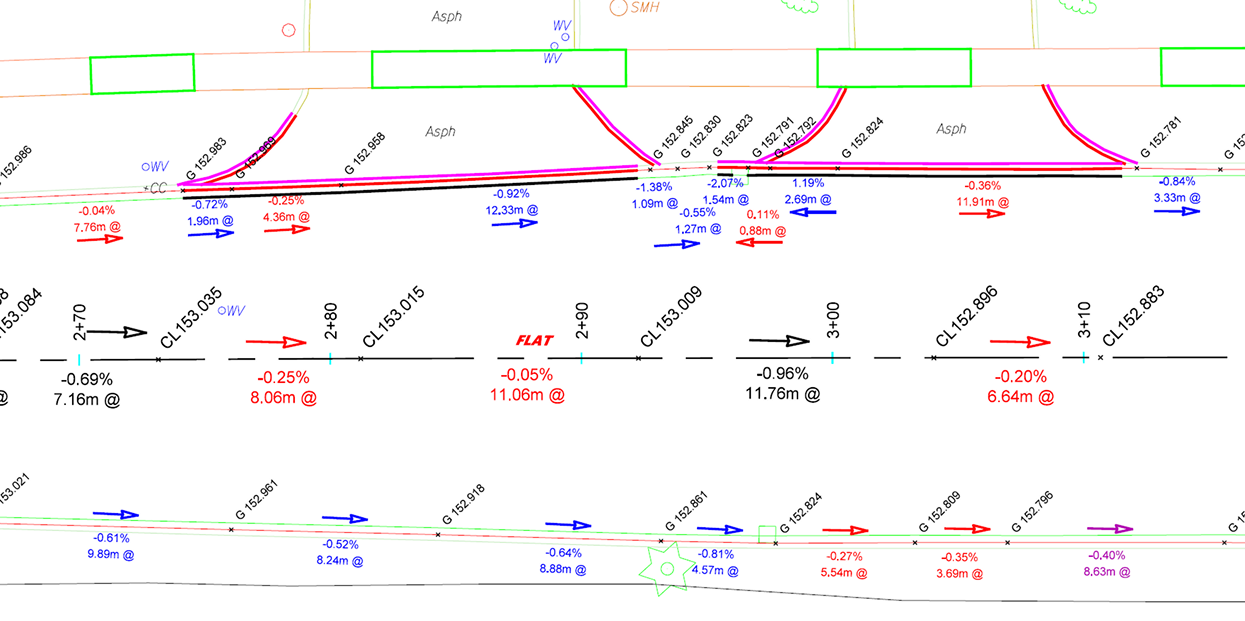
A review of the surveyed surface in MicroStation also identified deficient crossfalls, with some sections exhibiting transverse slopes as low as 0.0% to 0.2%, which are effectively flat and insufficient to provide positive drainage in accordance with current standards.

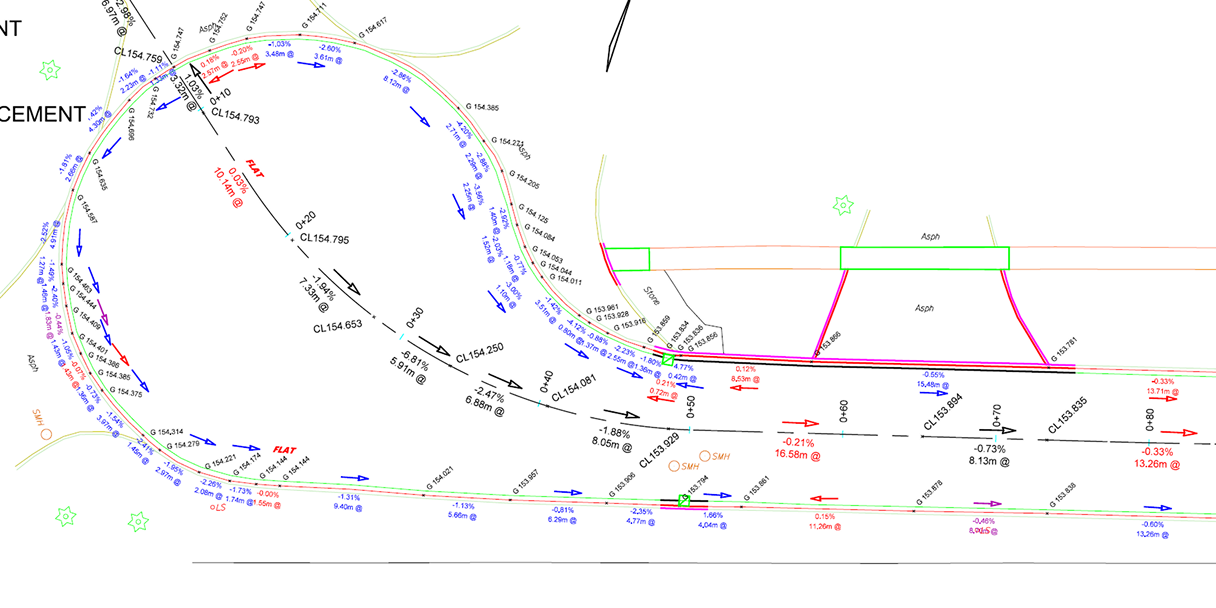
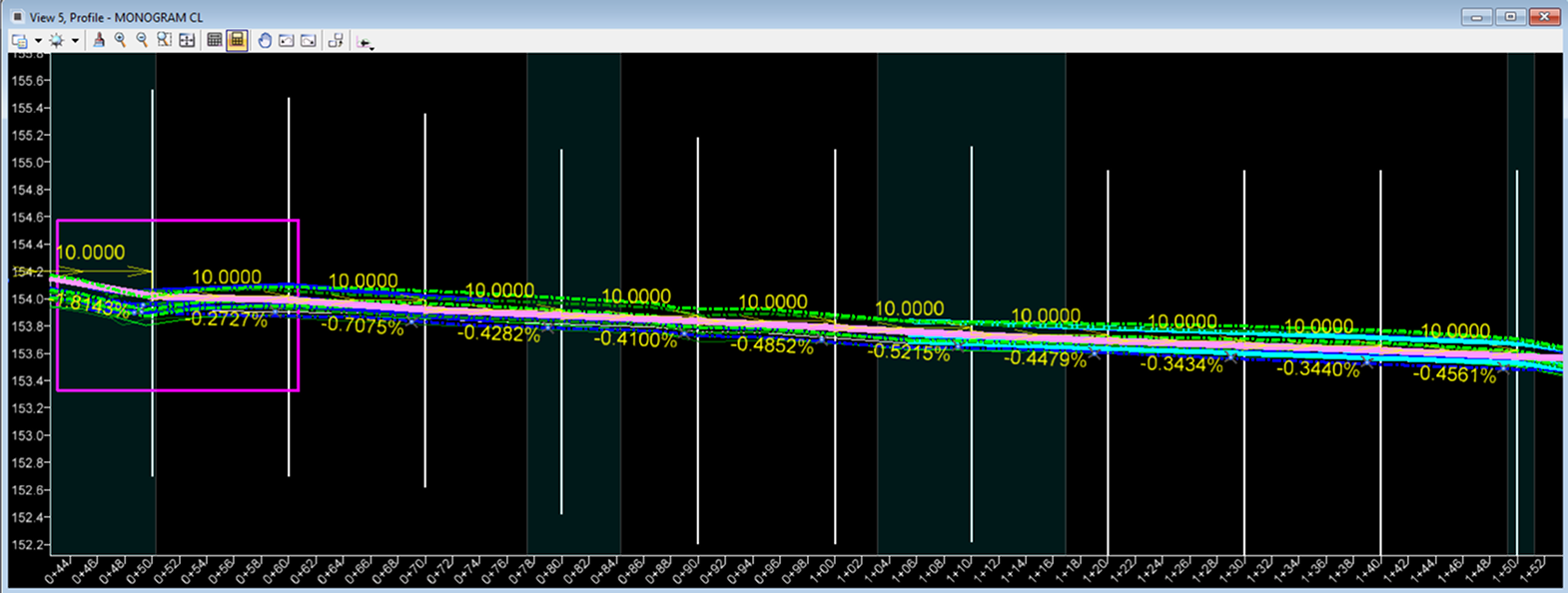
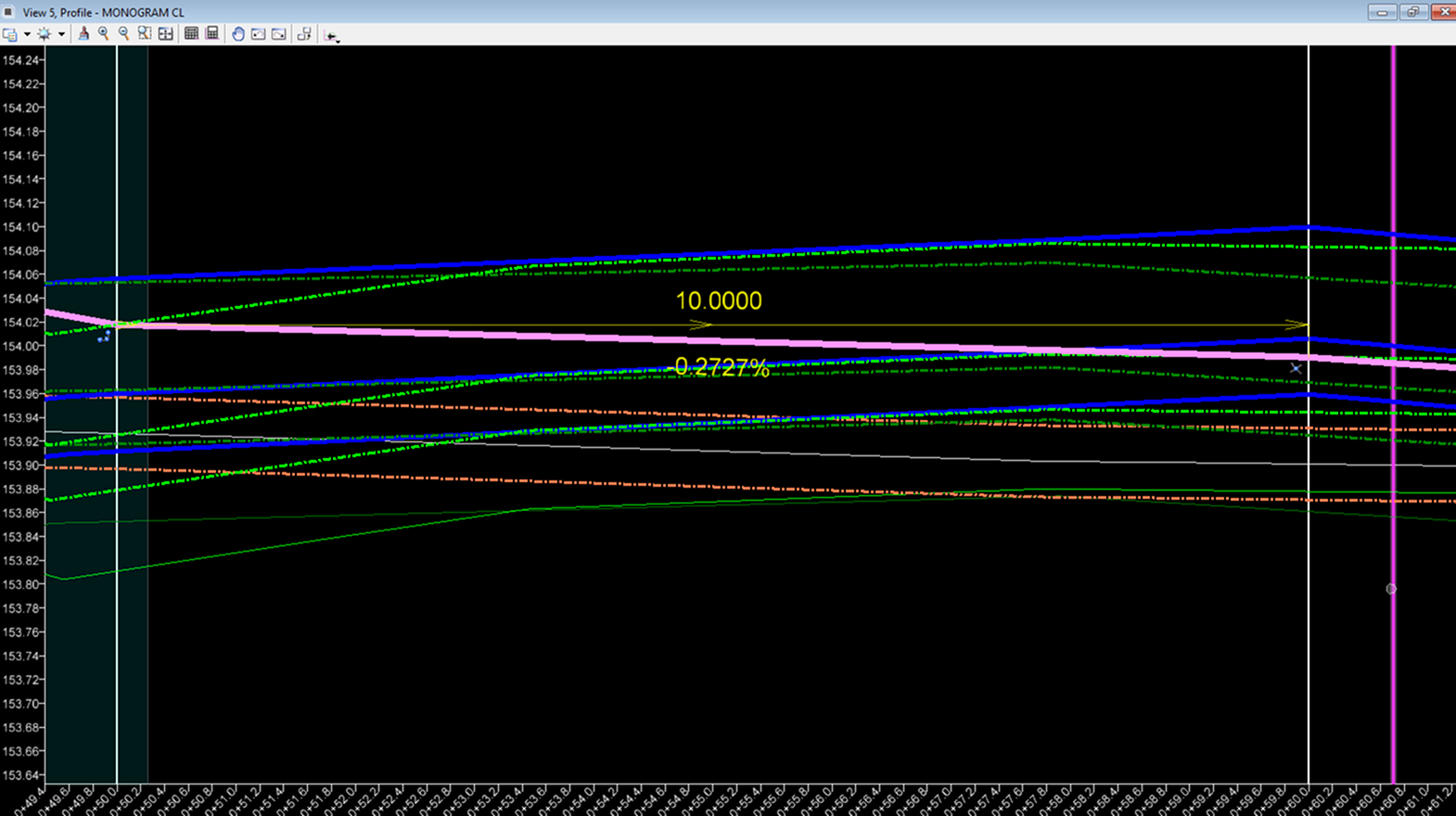
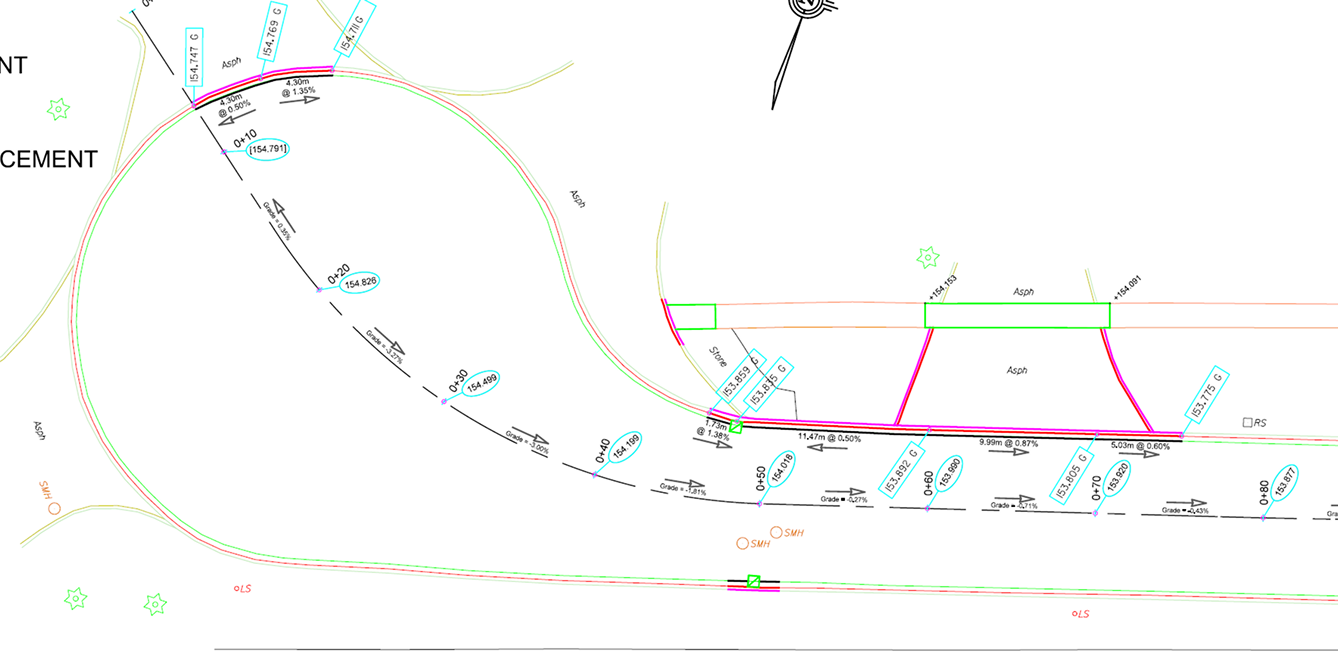
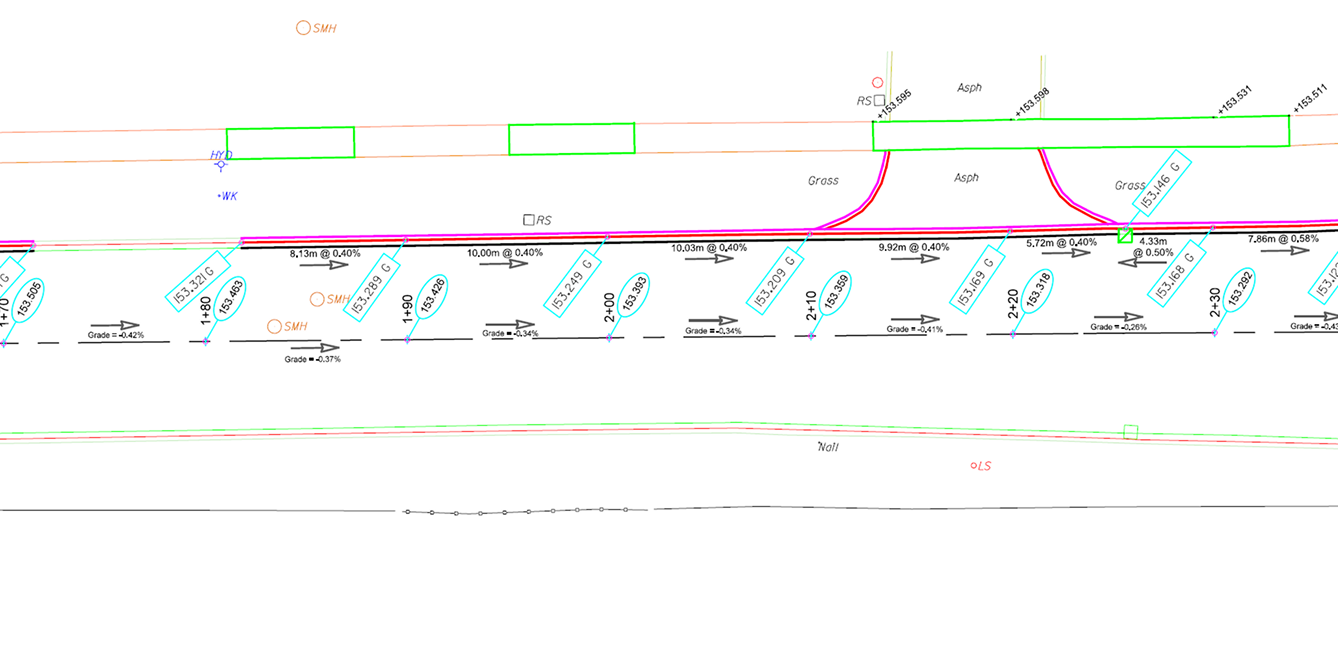
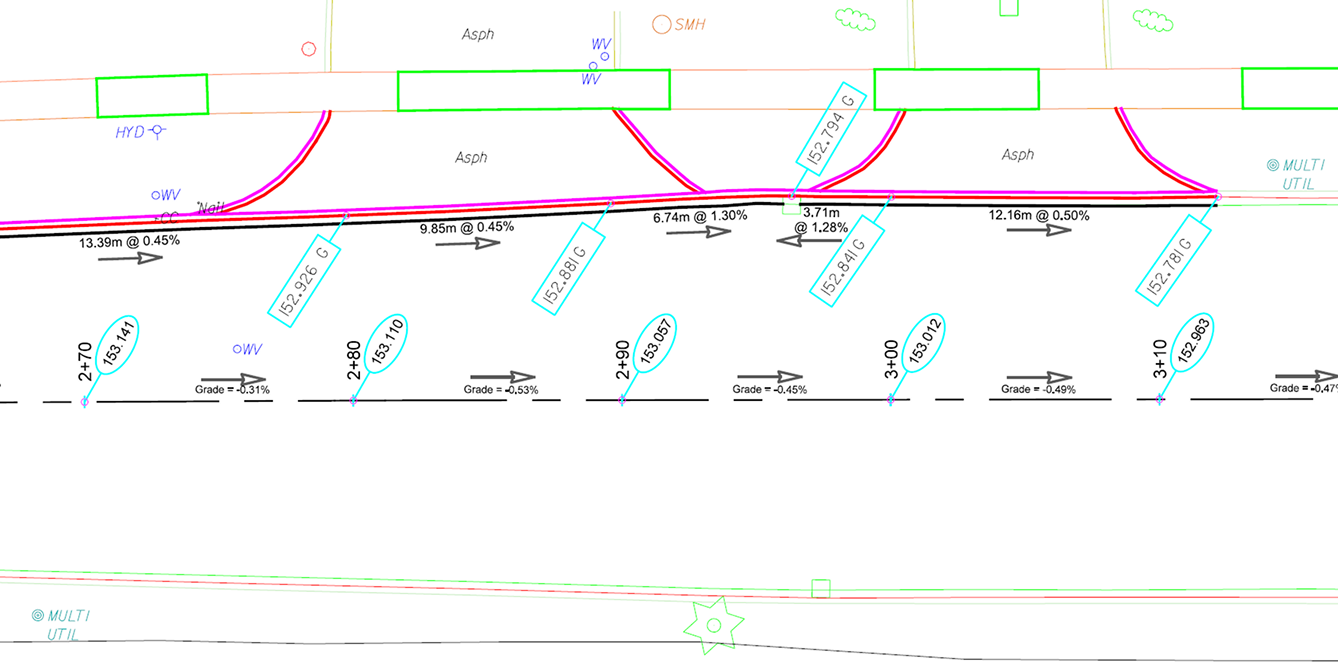
When surveyed, Monogram Place was found to have poor and flat longitudinal grades, with extended sections lacking sufficient slope to promote positive drainage and maintain proper surface runoff. However, the major rehabilitation scope allows the City to make meaningful adjustments to the road’s longitudinal profile and elevations, something that resurfacing projects, which are limited to minor 10 mm cut and fill, cannot achieve.

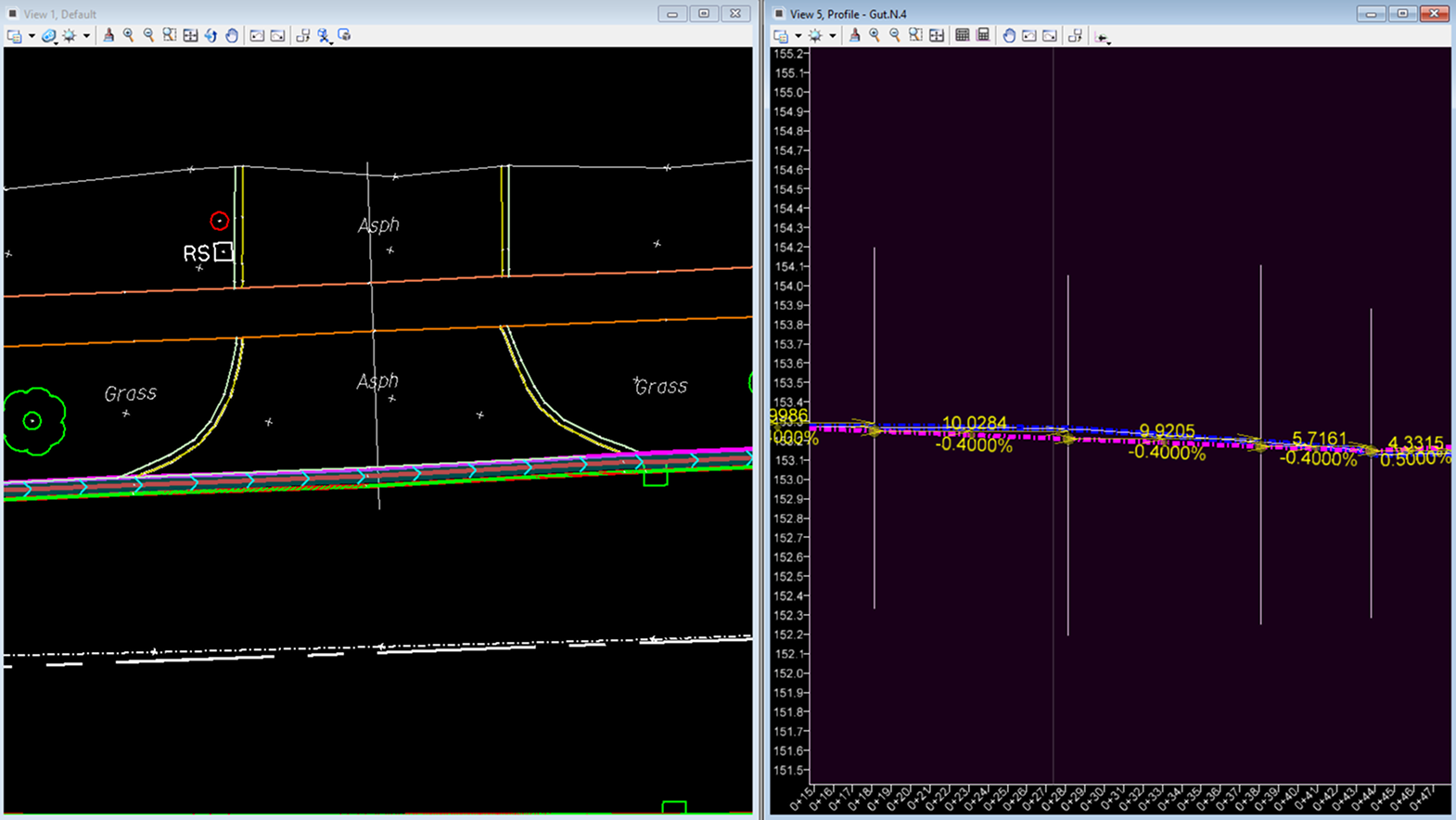
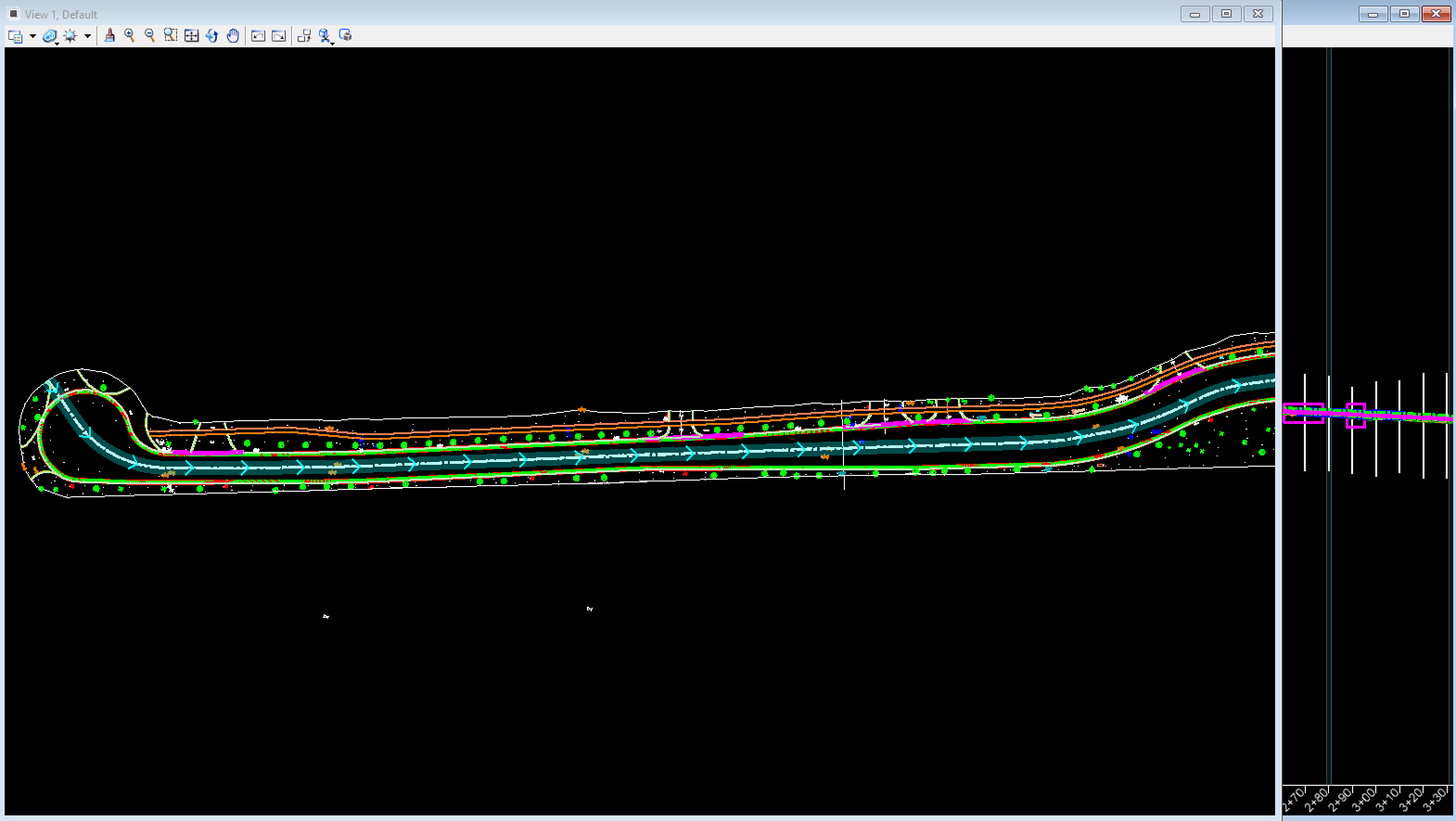
Given that the project is classified as a major rehabilitation, allowing for full removal and reconstruction of the pavement structure rather than a simple resurfacing limited to milling and paving the top asphalt layer, I was able to comprehensively regrade the roadway profile to address the deficient longitudinal grades and crossfalls; the maximum adjustment required was approximately 55 mm of cut at the curb and gutter, which, after verification against the proposed road crown elevations and existing driveway slopes, was confirmed to remain within acceptable geometric and constructability limits.

Before the rehabilitation, the roadway exhibited excessively flat or deficient grades, with some sections as low as 0.2%, but after regrading under the major rehabilitation scope, longitudinal slopes now range from a minimum of 0.35% to typical values around 0.5%, while the road crown has been raised to achieve crossfalls generally between 2–4%, although a few areas still measure 1–2%.

Road Engineering

Cookbook

Referrals

Resources

Contact